
- 1300 E 9th Suite 1210 Cleveland Ohio 44114
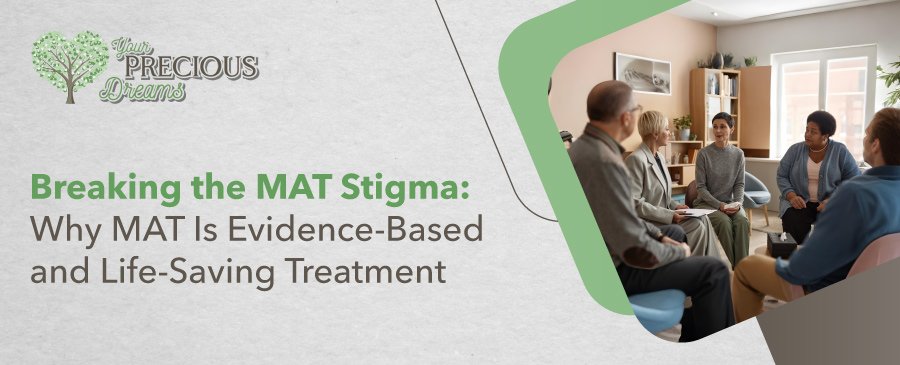
Breaking the MAT Stigma
One of the biggest barriers preventing people from accessing life-saving treatment for opioid addiction isn’t lack of availability, it’s MAT stigma. Despite overwhelming scientific evidence supporting Medication-Assisted Treatment (MAT), harmful myths and misconceptions continue to discourage individuals from seeking help and families from supporting their loved ones’ recovery. At Your Precious Dreams in Cleveland, Ohio, we’re committed to breaking down the MAT stigma and helping people understand that MAT is evidence-based, medically sound, and proven to save lives.
Understanding MAT Stigma: Where Does It Come From?
MAT stigma didn’t emerge from medical research or scientific evidence—it stems from outdated beliefs about addiction, misunderstandings about how MAT works, and the persistence of moral judgments about people with substance use disorders.
Common Sources of MAT Stigma:
Abstinence-Only Ideology:
Traditional 12-step programs historically emphasized complete abstinence from all substances, leading some to view any medication use as “not really sober.” While many recoveries support groups have evolved to accept MAT, this outdated belief persists in some communities.
Misunderstanding of Addiction as a Brain Disease:
When people view addiction as a moral failing or character weakness rather than a chronic medical condition, they fail to understand why medication is necessary to treat the neurological changes caused by prolonged opioid use.
Lack of Education About How MAT Medications Work:
Many people don’t understand the difference between therapeutic use of prescribed medication under medical supervision and illicit drug use to get high. This knowledge gap fuels the “is MAT just replacing one drug” misconception.
Media Misrepresentation:
Sensationalized stories about MAT medication diversion or misuse (which represents a tiny fraction of patients) create fear and suspicion, while the thousands of success stories go unreported.
Historical Context:
Decades of failed “war on drugs” policies that criminalized addiction rather than treating it as a health condition created deep-seated stigma that still affects how society views all aspects of addiction treatment.
Debunking the Biggest MAT Stigma Myths
Let’s address the most common myths perpetuating MAT stigma with scientific facts and evidence.
Myth 1: "Is MAT Just Replacing One Drug with Another?"
This is the most pervasive question contributing to MAT stigma, and the answer is definitively no. Here’s why:
MAT medications are prescribed and monitored by medical professionals rather than obtained illegally. They’re part of a comprehensive treatment plan that includes counseling, behavioral therapy, and medical supervision.
MAT medications normalize brain chemistry without producing euphoria Medications like buprenorphine (Suboxone) and methadone work on the same brain receptors as opioids but produce stable, controlled effects rather than the intense highs and dangerous lows of illicit drug use.
MAT allows people to function normally Unlike heroin or fentanyl, which cause sedation, impaired judgment, and dangerous behaviors, MAT medications allow individuals to work, care for their families, drive safely, and engage fully in life.
The comparison doesn’t hold up medically. Asking “is MAT just replacing one drug” is like asking if insulin is “replacing” the pancreas or if blood pressure medication is “replacing” healthy arteries. MAT treats a medical condition—opioid use disorder—just as other medications treat other chronic conditions.
Research proves MAT is treatment, not substitution:
- Brain imaging studies show MAT normalizes brain function disrupted by addiction
- Patients on MAT show improved cognitive function, not impairment
- MAT reduces drug-seeking behavior rather than perpetuating it
- People on MAT are significantly more likely to remain in treatment and achieve long-term recovery
Myth 2: "You're Not Really in Recovery if You're on Medication"
This harmful aspect of MAT stigma suggests that only complete abstinence from all substances constitutes “real recovery.” This is medically and factually wrong.
Recovery is defined by improved quality of life, not by what medications you take or don’t take.
Someone on MAT who is:
- Working or attending school regularly
- Maintaining healthy relationships with family and friends
- Meeting their responsibilities and obligations
- Not using illicit drugs
- Engaging in therapy and personal growth
- Contributing to their community
Nobody questions whether someone with diabetes is “really healthy” because they take insulin, or whether someone with depression is “really well” because they take antidepressants. Medication assisted treatment effectiveness should be judged by outcomes, not arbitrary definitions of purity.
Myth 3: "MAT Should Only Be Short-Term"
MAT stigma often manifests as pressure to discontinue medication quickly, but this contradicts medical evidence about opioid use disorder.
Opioid addiction is a chronic condition that causes lasting changes in brain chemistry. Some individuals need months of MAT, others need years, and some may require lifelong medication management—just like people with other chronic conditions.
Premature discontinuation increases relapse and death risk. Studies consistently show that individuals who stop MAT before they’re ready have significantly higher rates of:
- Return to opioid use
- Overdose
- Death
- Criminal justice involvement
- Loss of employment and housing
The length of MAT treatment should be individualized based on each person’s progress, stability, life circumstances, and clinical needs—not based on stigma-driven timelines or insurance company preferences.
Myth 4: "MAT Is Just for People Who Aren't Strong Enough to Quit"
This cruel manifestation of MAT stigma suggests addiction is about willpower, and people who need medication are weak. This is completely false.
Addiction fundamentally alters brain chemistry. Prolonged opioid use changes:
- Dopamine regulation systems
- Stress response mechanisms
- Impulse control centers
- Decision-making processes
- Natural reward pathways
Expecting willpower alone to overcome these neurological changes is like expecting willpower to heal a broken bone or cure diabetes. Medication assisted treatment effectiveness comes from addressing the biological basis of addiction, not from any personal weakness in people who need it.
The Overwhelming Evidence for Medication Assisted Treatment Effectiveness
While MAT stigma persists in some communities, the medical and scientific communities are united: MAT is the most effective treatment for opioid use disorder. The evidence is overwhelming:
MAT Saves Lives
Reduces overdose death rates by 50% or more. Multiple large-scale studies show that people receiving MAT are significantly less likely to die from overdose compared to those receiving counseling alone or no treatment.
Prevents fatal overdoses during vulnerable periods. The highest risk period for fatal overdose is immediately after detoxification or release from incarceration. MAT provides crucial protection during these dangerous times.
Reverses the opioid epidemic’s death toll. Communities with better MAT access show measurably lower overdose mortality rates than communities where stigma limits access.
MAT Keeps People in Treatment Longer
Treatment retention is the strongest predictor of long-term recovery. Studies consistently show:
- 75% of MAT patients remain in treatment at one year
- Only 25-40% of patients receiving counseling alone remain in treatment at one year
- Longer treatment duration strongly correlates with sustained recovery
MAT addresses the physical aspects of addiction (cravings and withdrawal) that often drive people to drop out of counseling-only programs, allowing them to focus on addressing psychological and social factors in therapy.
MAT Improves Overall Quality of Life
Beyond just reducing drug use, medication assisted treatment effectiveness extends to multiple life domains:
Employment: MAT patients show significantly higher rates of employment and job retention compared to those not receiving medication.
Housing Stability: Individuals on MAT are more likely to maintain stable housing and less likely to experience homelessness.
Criminal Justice Involvement: MAT dramatically reduces criminal activity associated with obtaining and using illegal opioids, reducing arrests and incarceration.
Physical Health: MAT reduces risk of infectious diseases (HIV, Hepatitis C), improves overall health outcomes, and increases engagement with primary healthcare.
Relationships: Patients report improved family relationships, better parenting, and stronger social support networks.
Mental Health: Co-occurring depression and anxiety often improve significantly as patients stabilize on MAT and engage in therapy.
Schedule Your Consultation
Latest Blogs



Quick Links
Office Address
1300 E 9th Suite 1210 Cleveland Ohio 44114
Email Address
yourpreciousdreams@yahoo.com
Your Precious Dreams | Powered By DocsMed © 2025 All Rights Reserved