
- 1300 E 9th Suite 1210 Cleveland Ohio 44114
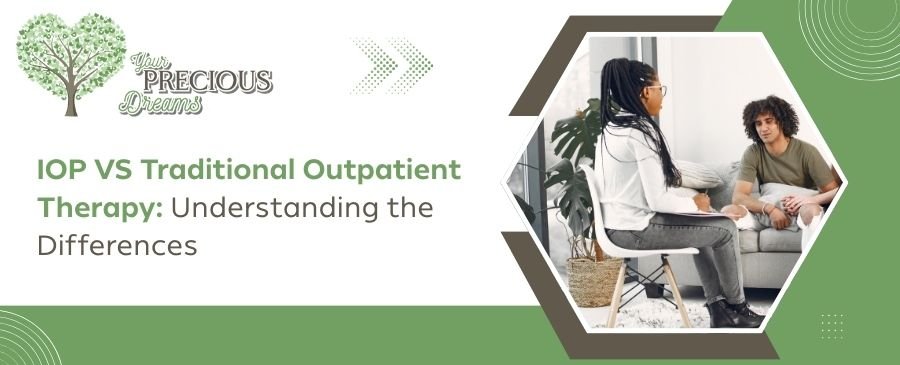
IOP VS Traditional Outpatient Therapy
When seeking mental health treatment, understanding your options is crucial for finding the right level of care. Two common treatment modalities, Intensive Outpatient Programs (IOP) and traditional outpatient therapy, serve different needs and offer varying levels of support. At Your Precious Dreams, we help you navigate these choices to find the treatment approach that best supports your recovery. Understanding IOP vs outpatient therapy empowers you to make informed decisions about your mental health care and ensures you receive the appropriate intensity of treatment for your specific situation.
What Is Traditional Outpatient Therapy?
Traditional outpatient therapy typically involves meeting with a therapist or psychiatrist once or twice per week for individual sessions lasting 45-60 minutes. This is the most common form of mental health treatment and works well for individuals with:
- Stable mental health conditions requiring ongoing management
- Mild to moderate symptoms that don’t interfere significantly with daily functioning
- Strong support systems and coping skills already in place
- The ability to manage symptoms between sessions
What Is an Intensive Outpatient Program (IOP)?
An Intensive Outpatient Program provides structured, comprehensive treatment at a higher intensity than traditional therapy while still allowing you to live at home and maintain work or family responsibilities.
IOP typically involves 9-12 hours of treatment per week, usually divided into 3-hour sessions occurring 3-4 days weekly. Treatment includes a combination of individual therapy, group therapy, psychiatric medication management, and skill-building activities.
Key Differences Between IOP vs Outpatient Therapy
Intensity and Time Commitment
The most obvious difference between IOP vs outpatient therapy is treatment intensity. Traditional outpatient therapy requires 1-2 hours weekly, while IOP demands 9-12 hours weekly. This increased time commitment provides more intensive support during critical periods of mental health treatment.
Structure and Programming
Traditional outpatient therapy is individually tailored with flexible scheduling. You work one-on-one with your therapist on specific issues at your own pace.
IOP offers structured programming with scheduled sessions, curriculum-based groups, and coordinated care among multiple providers. This structure provides consistency and accountability that many people need during acute mental health episodes.
Treatment Approach
Outpatient therapy focuses primarily on talk therapy—processing emotions, developing insight, and working through specific issues with your therapist.
IOP combines multiple therapeutic modalities: individual therapy for personalized support, group therapy for peer connection and shared learning, psychiatric medication management, and skills training in areas like emotion regulation, distress tolerance, and interpersonal effectiveness.
Level of Support
Traditional outpatient therapy provides support once or twice weekly with limited contact between sessions unless you’re in crisis.
IOP offers daily or near-daily contact with treatment providers, immediate access to clinical support when needed, and a built-in peer community experiencing similar challenges. This increased support prevents crises and provides intervention before symptoms escalate.
Treatment Goals
Outpatient therapy goals often focus on personal growth, relationship improvement, stress management, and ongoing symptom maintenance.
IOP goals target symptom stabilization, crisis prevention, development of robust coping skills, medication optimization, and preparation for stepping down to traditional outpatient care.
When Is IOP the Right Choice?
Understanding when IOP vs outpatient therapy is appropriate helps ensure you receive adequate support. Consider IOP if you’re experiencing:
Recent psychiatric hospitalization: IOP serves as a step-down from inpatient care, providing intensive support as you transition back to daily life.
Worsening symptoms despite outpatient therapy: If your current treatment isn’t preventing symptom escalation, IOP’s increased intensity may be necessary.
Suicidal thoughts or self-harm urges: When safety concerns arise but hospitalization isn’t required, IOP provides daily monitoring and support.
Substance use affecting mental health: Co-occurring disorders often require IOP’s comprehensive, coordinated approach.
Major life stressors overwhelming coping skills: Divorce, loss, trauma, or other significant events may temporarily require more support than weekly therapy provides.
Need for medication stabilization: When starting new psychiatric medications or adjusting dosages, IOP’s frequent monitoring ensures safety and effectiveness.
When Is Traditional Outpatient Therapy Sufficient?
Traditional outpatient therapy works well when you have:
- Stable symptoms managed with current treatment
- Strong coping skills and support systems
- No recent crises or hospitalizations
- Ability to function in work, school, and relationships
- Desire for ongoing maintenance and personal growth
Many individuals successfully manage mental health conditions with weekly therapy, especially after completing more intensive treatment like IOP.
Can You Transition Between Levels of Care?
Absolutely. Mental health treatment isn’t one-size-fits-all or static. You might start in IOP to stabilize acute symptoms, then step down to traditional outpatient therapy as you improve. Conversely, if symptoms worsen during outpatient treatment, stepping up to IOP provides necessary support before reaching crisis level.
At Your Precious Dreams, we assess your needs regularly and recommend the appropriate level of care based on symptom severity, functional impairment, and treatment response.
Making the Right Choice for Your Mental Health
The decision between IOP vs outpatient therapy should be made collaboratively with mental health professionals who understand your unique situation, symptoms, and treatment goals.
Consider these factors:
- How much do symptoms interfere with daily functioning?
- Do you have family or friends providing additional support?
- What has worked or not worked previously?
- Are you facing significant life challenges?
- Are you experiencing thoughts of self-harm?
- Can you commit to IOP’s time requirements if needed?
Your Precious Dreams: Comprehensive Mental Health Care
At Your Precious Dreams, we offer both IOP and traditional outpatient therapy, ensuring you receive the right level of care for your current needs. Our experienced clinical team conducts thorough assessments to recommend appropriate treatment intensity, and we support smooth transitions between levels of care as your needs change. Whether you need the intensive support of IOP or the ongoing maintenance of weekly therapy, we’re here to provide evidence-based treatment delivered with compassion and respect.
Frequently Asked Questions
Item #1
Lorem ipsum dolor sit amet, consectetur adipiscing elit. Ut elit tellus, luctus nec ullamcorper mattis, pulvinar dapibus leo.
Item #2
Lorem ipsum dolor sit amet, consectetur adipiscing elit. Ut elit tellus, luctus nec ullamcorper mattis, pulvinar dapibus leo.
Item #3
Lorem ipsum dolor sit amet, consectetur adipiscing elit. Ut elit tellus, luctus nec ullamcorper mattis, pulvinar dapibus leo.
Schedule Your Consultation
Latest Blogs

Quick Links
Office Address
1300 E 9th Suite 1210 Cleveland Ohio 44114
Email Address
yourpreciousdreams@yahoo.com
Your Precious Dreams | Powered By DocsMed © 2025 All Rights Reserved