
- 1300 E 9th Suite 1210 Cleveland Ohio 44114
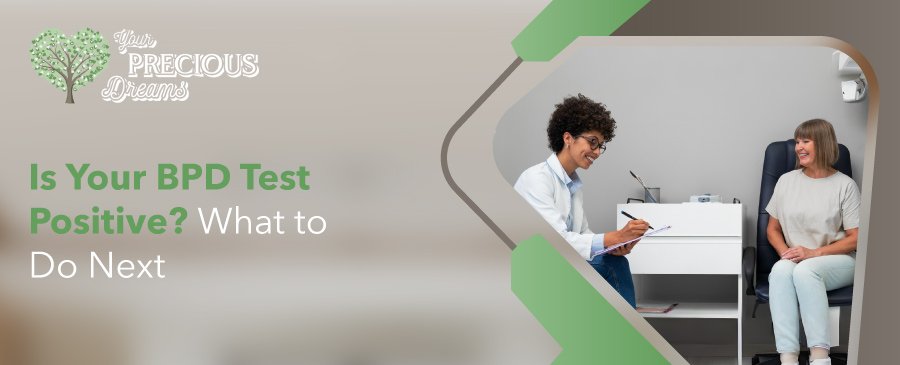
Is Your BPD Test Positive? What to Do Next
If you or your loved one has been diagnosed with BPD, please know that with the right support, many people with BPD experience significant improvement over time. And there are multiple psychotherapies (talk therapies) which are used to treat Borderline Personality Disorder, including cognitive behavioral therapy and psychodynamic therapy. However, if you have diagnosed BPD yourself through an online test, you may be mistaken.
Let’s first understand that taking an online BPD test never guarantees that you have Borderline Personality Disorder, instead, consult a Clinical Psychologist, Psychiatrist, or a Licensed Clinical Social Worker and they can diagnose BPD. The diagnosis process usually involves conducting a deep interview where they take a deep dive noticing your mood, behavior, impulse control, emotions, and stress. Furthermore, your personal medical history and family medical history, specifically related to mental issues, shall also be evaluated.
Understanding Borderline Personality Disorder
Borderline personality disorder (BPD) is a complex mental health condition marked by deep instability in emotions, relationships, self-image, and behavior. It affects roughly 1–2% of the general population, and PubMed highlights that the prevalence is from 0.7 to 2.7%. However, it remains one of the most misunderstood diagnoses in psychiatry.
People with BPD often experience emotions far more intensely than others. Relationships may swing between idealization and intense disappointment. A fear of abandonment — real or imagined — can drive impulsive decisions. Chronic feelings of emptiness, episodes of dissociation, and difficulty regulating stress are also common features.
BPD typically emerges in adolescence (between 10 to 19 years of age) or early adulthood. It is not a character flaw or a life sentence.
Key Methods Doctors Use for Diagnosing BPD
Suppose you have taken a BPD test and are curious as to what symptoms your doctor will consider to diagnose your BPD, here is what your doctor may explore:
Behaviors and impulse control:
Do you engage in reckless spending, substance use, self-harm, or other impulsive actions? How do you respond to perceived rejection or abandonment?
Emotions, mood, and stress:
How intensely do you feel emotions? How quickly do they shift? How do you manage stress in relationships or daily life?
Personal and family medical history:
Your provider will ask about past mental health treatment, any diagnoses you’ve had, and whether mental health conditions run in your family. Family history can offer meaningful context for your current symptoms.
There are no blood tests, brain scans, or lab work involved. After gathering the required information, your provider will evaluate the severity of your symptoms and discuss what the diagnosis means for you.
Therapies to Treat BPD
BPD is treatable. And psychotherapy is the foundation of effective care, not medicine. Several evidence-based treatments have demonstrated real results. According to Mayoclinic, following are the types of helpful therapies:
Dialectical Behavior Therapy (DBT):
Teaching you on how to control emotions when you can actually go out of control. This is currently the most widely researched treatment for BPD. Developed specifically for people living with BPD.
Mentalization-Based Therapy (MBT):
This therapy helps you understand your own mental states and those of others — a skill that often breaks down during intense emotional episodes.
Transference-Focused Psychotherapy (TFP):
Uses the therapeutic relationship itself as a tool to explore and reintegrate conflicting internal representations of self and others. Research published in the British Journal of Medical Practitioners describes TFP as a structured, evidence-based approach that works through a multi-step interpretive process.
Schema-Focused Therapy (SFT):
Focussed on changing patterns of negative thoughts, this therapy is also considered promising by clinical researchers.
Furthermore, commonly known as STEPPS, systems training for emotional predictability and problem-solving is a program of 20 weeks which includes a group of family members, friends, caretakers and any other members of importance.
How to Treat BPD Naturally?
Along with the therapy, following additions to your lifestyle can meaningfully support BPD symptom management:
Mindfulness practice:
Is arguably the most evidence-backed natural support for BPD. Deficits in mindfulness are consistently linked to BPD severity, and mindfulness training has been shown to reduce symptoms. It is also the foundational skill in DBT. Daily practice — even five to ten minutes — can gradually build emotional awareness and reduce reactive behavior.
Regular physical activity:
supports mood regulation through neurochemical pathways and helps discharge the physical tension that often accompanies emotional dysregulation.
Sleep consistency:
Matters more than most people realize. Irregular sleep intensifies emotional reactivity. Establishing a steady schedule and winding down without screens can reduce the volatility that makes BPD symptoms worse.
Nutrition:
Also plays a supporting role. A diet rich in whole grains, lean proteins, fruits, and vegetables helps stabilize the brain’s baseline functioning. Minimizing caffeine, sugar, and heavily processed foods may reduce mood swings over time
Strong support systems:
Trusted friends, peer support groups, or family members who understand your diagnosis — provide a stabilizing buffer during difficult periods.
Takeaways:
There is no single test, no quick fix, and no medication specifically designed to treat BPD. Instead correct treatment includes effective therapy options, a clear clinical path forward, and genuine reason for hope.
If you suspect BPD — in yourself or someone you love — the most important step is to connect with a qualified mental health professional. A proper assessment is where clarity begins.
Frequently Asked Questions
Example Title 1
Lorem ipsum dolor sit amet, consectetur adipiscing elit. Mauris tempus nisl vitae magna pulvinar laoreet. Nullam erat ipsum, mattis nec mollis ac, accumsan a enim. Nunc at euismod arcu. Aliquam ullamcorper eros justo, vel mollis neque facilisis vel. Proin augue tortor, condimentum id sapien a, tempus venenatis massa. Aliquam egestas eget diam sed sagittis. Vivamus consectetur purus vel felis molestie sollicitudin. Vivamus sit amet enim nisl. Cras vitae varius metus, a hendrerit ex. Sed in mi dolor. Proin pretium nibh non volutpat efficitur.
Example Title 2
Lorem ipsum dolor sit amet, consectetur adipiscing elit. Mauris tempus nisl vitae magna pulvinar laoreet. Nullam erat ipsum, mattis nec mollis ac, accumsan a enim. Nunc at euismod arcu. Aliquam ullamcorper eros justo, vel mollis neque facilisis vel. Proin augue tortor, condimentum id sapien a, tempus venenatis massa. Aliquam egestas eget diam sed sagittis. Vivamus consectetur purus vel felis molestie sollicitudin. Vivamus sit amet enim nisl. Cras vitae varius metus, a hendrerit ex. Sed in mi dolor. Proin pretium nibh non volutpat efficitur.
Example Title
Lorem ipsum dolor sit amet, consectetur adipiscing elit. Mauris tempus nisl vitae magna pulvinar laoreet. Nullam erat ipsum, mattis nec mollis ac, accumsan a enim. Nunc at euismod arcu. Aliquam ullamcorper eros justo, vel mollis neque facilisis vel. Proin augue tortor, condimentum id sapien a, tempus venenatis massa. Aliquam egestas eget diam sed sagittis. Vivamus consectetur purus vel felis molestie sollicitudin. Vivamus sit amet enim nisl. Cras vitae varius metus, a hendrerit ex. Sed in mi dolor. Proin pretium nibh non volutpat efficitur.
Schedule Your Consultation
Latest Blogs


Quick Links
Office Address
1300 E 9th Suite 1210 Cleveland Ohio 44114
Email Address
yourpreciousdreams@yahoo.com
Your Precious Dreams | Powered By DocsMed © 2025 All Rights Reserved