

- 1300 E 9th Suite 1210 Cleveland Ohio 44114
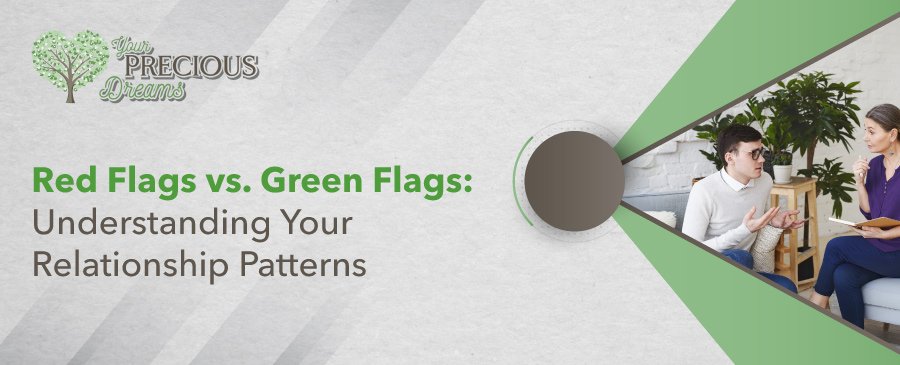
Understanding Your Relationship Patterns
Every relationship has a rhythm – a way of moving. Unfortunately, being unaware of relationship patterns, we don’t recognize the specific stage we are at, and hence miss the most important part, or, the relationship altogether.
Some patterns are worth keeping. Others? Not so much. However, do not just take abrupt impulsive decisions, nor delay a right decision so much that you don’t have time to return back without big losses.
However, most importantly, whichever stage of life you are going through, keep one thing in mind – it’s 10% what is actually happening to you and 90% of how you react to it.
Here’s a practical look at what shapes your relationships — and how to differentiate between a good and a not-so-good relationship.
What Even Is a Relationship Pattern?
A relationship pattern is simply a repeated way you and your partner interact. Think of it as your relationship’s default mode — the way things tend to go when stress hits, when you disagree, or when one of you needs space.
Research from Clark University shows that naming these patterns (what researchers call “relationship pattern labeling”) can actually improve intimacy, trust, and overall satisfaction between partners. As they say, “Naming something gives you power over it.”
Instead of ruining the family, maybe it’s time to take a family session by licensed therapists at Your Precious Dreams.
The 12 Types of Relationships
Psychologists have identified 12 types of relationships based on recurring interaction styles. See if any of these sound familiar:
1. Cactus/Fern Relationship:
One partner craves closeness, the other values privacy. The classic “why aren’t you texting me back” vs. “I just need space” pairing.
2. Introvert/Extrovert Relationship:
One recharges alone; the other comes alive around people. Vacation planning can get… interesting.
3. Approach/Withdraw Relationship:
One reaches for connection, the other pulls back when overwhelmed. This isn’t the same as Cactus/Fern — it’s more reactive, triggered by conflict or intensity.
4. Emotional/Logical:
One leads with the heart, the other with reason. Neither is wrong, but translation takes work.
5. Criticize/Defend Relationship:
One partner regularly nitpicks, the other stays permanently on guard. Exhausting for both sides.
6. Mutual Avoidance:
Neither partner wants to bring up problems. The issues pile up quietly.
7. Mutual Blame Relationship:
Both partners point fingers. No one owns anything.
8. Mountains/Molehills Relationship:
One person catastrophizes; the other dismisses. Nobody feels heard.
9. Spender/Saver Relationship:
A money mismatch that can quietly erode even strong relationships.
10. Teacher/Student Relationship:
One partner constantly instructs the other. Works great if the “student” actually wants lessons. Often, they don’t.
11. Dreamer/Realist Relationship:
One romanticizes everything; the other keeps both feet on the ground.
12. Conventional/Unconventional Relationship:
One loves routine; the other craves novelty and spontaneity.
Most couples find themselves in more than one pattern and that’s normal. The goal isn’t to have no pattern — it’s to understand yours.
A Special Note: When Patterns Become Toxic
Not all patterns are just quirks. Some signal something more serious.
1. Toxic Relationship Patterns
There are ups and downs in every relationship, however, if the patterns are the same every time, you may need to act. Following are signs of a toxic relationship:
- Arguments always end with you apologizing, even when you weren’t wrong
- Your needs get brushed aside again and again
- You feel like you’re walking on eggshells — unsure what mood you’ll come home to
The key sign: It doesn’t start dramatically. Control, dismissal, and emotional withdrawal creep in gradually. By the time you notice, it already feels normal.
What to do: Trust the pattern, not the good days. One good week doesn’t erase three bad months.
2. Narcissist Relationship Patterns — Too Good, Then Too Cold
According to a study shared by Psychology Today, narcissists usually have self-centeredness, arrogance, and they feel the world revolves around them – last but not least, they try to control and manipulate situations in a manner as if nothing bad ever happened from their end.
- Early stages: intense attention, flattery, grand gestures — almost overwhelming
- Later: withdrawal, constant criticism, gaslighting (“that never happened”)
- Every conversation somehow circles back to them
The key sign: According to Psychology Today, narcissistic partners tend to make you feel invisible — your feelings are never quite as valid as theirs, and empathy is scarce when you actually need it. (Source: Psychology Today — “Red Flags and Blind Spots in Dating a Narcissist”)
What to do: Notice how they talk about exes and past relationships. Do they take any responsibility, or is everyone else always the problem?
3. Borderline Personality Disorder Relationship Patterns
While people with borderline personality disorder seem to be bad, they are actually fighting with themselves most of the time. They are afraid of abandonment, they are confused with their own personality, and even fight with suicidal thoughts. Thus, living with them may be difficult, but just remember, they are manageable, you need the right words to speak and incorrect words to control.
- Deep love and closeness one day, sudden fear or anger the next
- Reactions to small events feel disproportionately intense
- Both partners often feel emotionally destabilized and confused
The key sign: The highs feel very high and the lows feel very low — with little middle ground. It can feel like you never know which version of the relationship you’re in.
Important to know: BPD is a real, diagnosable condition — not a personality flaw or a choice. People with BPD can absolutely have healthy, fulfilling relationships with the right support and professional guidance.
Green Flags: Signs You've Found a Good One
Green flags don’t get nearly as much attention as red ones. Here’s what to look for:
- They actually listen
Not just nod-and-wait-for-their-turn listening. Real, phone-in-pocket, ask-a-follow-up-question listening. Active communication is a cornerstone of healthy relationships — couples who talk through difficult topics without going defensive tend to build lasting trust. - They respect your boundaries without negotiation
A partner who gives you space to be your own person — to have friends, ambitions, and time alone — is showing you something important about how they see you. - They show up consistently
Words are easy. Reliability is the green flag. Someone who follows through when things get tough, who is emotionally available and keeps their promises, creates genuine security. - They can handle conflict like an adult
Disagreements are inevitable. What matters is how they’re handled. A partner who brings empathy and a willingness to compromise to an argument — rather than contempt or stonewalling — is a keeper. - They take accountability
No deflecting, no rewriting history. Someone who can say “I was wrong” or “I handled that badly” signals emotional maturity and a real willingness to grow. - They share your core values
You don’t need to agree on everything. But sharing a vision for the future — whether that’s family, finances, how you want to live — keeps you building in the same direction. - They celebrate you
Not just tolerating your goals, but actively cheering them on. A partner who shows up at your finish line, supports your career change, or brags about you at dinner — that’s someone investing in you long-term.
Red Flags: What to Stop Ignoring
Early warning signs are easy to explain away. Here’s when to stop explaining:
- Lack of interest in you
If they talk only about themselves and rarely ask about your life — or tune out when you do share — that’s not shyness. That’s a preview of how invisible you’ll feel. - Narcissistic-like traits from the start
Grandiosity, a need for constant admiration, zero accountability, and an inability to empathize are early indicators of narcissistic patterns. These traits don’t typically improve with time or love. They tend to intensify. - Possessiveness disguised as affection
There’s a difference between caring where you are and needing to control it. Possessiveness tied to anger, jealousy, or attempts to isolate you from friends and family is a serious flag — one that often escalates. - Moving too fast sexually
Pressure around physical intimacy early on — especially if it ignores your comfort level — reflects poor respect for boundaries and a focus on their own wants over yours. - Drinking or substance use that concerns you
If it already gives you pause on a first or second date, trust that feeling. Hoping it gets better without any indication that it will is a pattern in itself.
The Bottom Line
Your relationship patterns didn’t appear out of nowhere. They were shaped by past experiences, family, and what you’ve come to expect from love. The good news: patterns can change once you can see them clearly.
Start by naming what you recognize. Talk about it with your partner. And take the green flags just as seriously as the red ones — because knowing what a healthy relationship feels like is half the work of building one.
Disclaimer: This article is for informational and educational purposes only and is not a substitute for professional medical advice, diagnosis, or behavioral health therapy. If you are facing relationship distress, trauma, or substance use challenges, please reach out to a licensed professional or contact our clinic directly to speak with a counselor.
Schedule Your Consultation
Latest Blogs


Quick Links
Office Address
1300 E 9th Suite 1210 Cleveland Ohio 44114
Email Address
yourpreciousdreams@yahoo.com
Your Precious Dreams | Powered By DocsMed © 2025 All Rights Reserved