
- 1300 E 9th Suite 1210 Cleveland Ohio 44114
Lobotomy: What It Is, What It Did, and Why We Never Look Back
The word lobotomy comes from the Greek: lobos (lobe of the brain) and tome (to cut). In plain terms, it means surgically cutting the connections in the brain’s frontal lobe — the part responsible for your personality, emotions, decision-making, and self-control.
Think of the frontal lobe as the CEO of your brain. It coordinates signals between the emotional centers deep in the brain and the rest of your thinking mind. A lobotomy deliberately disrupted that communication. The idea was: if you cut off the “bad signals” causing mental illness symptoms, the patient might calm down.
That logic, as we’ll see, caused tremendous harm. Let’s take a deep dive into one of medicine’s most controversial chapters and what it teaches us about mental health care today.
Is a Frontal Lobotomy Different from a Regular Lobotomy?
“Frontal lobotomy” is just the most common type, but yes, there are distinctions worth knowing.
Lobotomy is the broad term for any psychosurgery that severs (cuts off) nerve pathways in the brain’s lobes. Frontal lobotomy specifically targets the prefrontal cortex, the front-most part of the brain.
All lobotomies performed on a significant scale targeted the frontal lobe in some way. The difference was mostly in how surgeons got there.
Types of Lobotomy
While there were few different types of lobotomy, the target was the same, to sever frontal lobes of the brain. Following were the main two types of lobotomy procedures:
1. Frontal (or Prefrontal) Lobotomy
The original method, developed in 1935 by Portuguese neurologist António Egas Moniz and his colleague Almeida Lima. A surgeon drilled holes on each side of the skull, then inserted a thin instrument called a leucotome to cut through the brain tissue. It was performed under general anesthesia in an operating room.
2. Transorbital Lobotomy ("Ice Pick Lobotomy")
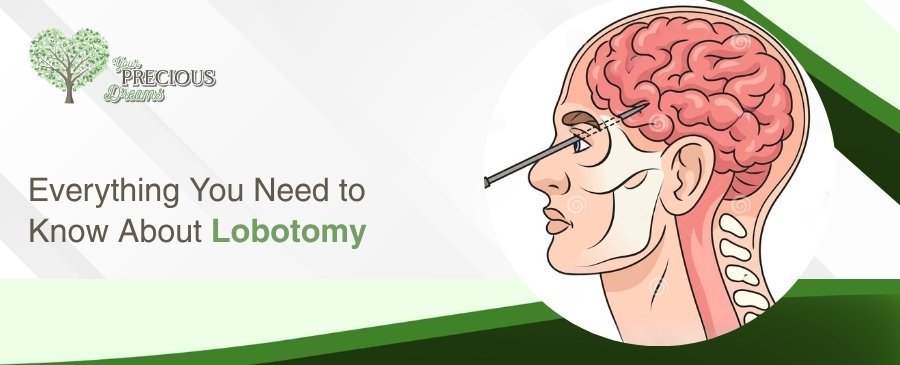
This is the version that horrifies people most — and for good reason. Developed in 1946 by American neurologist Walter Freeman, it involved inserting a thin metal rod (resembling an ice pick) through the eye socket, above the eyeball, and into the brain. A mallet drove it through the thin bone. Freeman would then sweep the rod back and forth to sever brain connections.
Freeman performed this in clinics without full surgical teams, sometimes on multiple patients in a day. He even drove across the country in a vehicle he called the “Lobotomobile,” performing the procedure at psychiatric hospitals.
Does Lobotomy Help with Anxiety?
While lobotomy was never a proper solution to anxiety, until the 1950s, no antipsychotic drugs were available thus psychiatrists had no other options available – this has been highlighted by sciencedirect as well.
In the short term, some patients did appear calmer and less agitated after a lobotomy. Early records from Moniz’s first 20 lobotomies reported that 35% of patients showed complete remission of psychiatric symptoms, and another 35% showed mild improvement. Anxiety, extreme agitation, and compulsive behaviors sometimes decreased.
But here’s what those early “success” reports left out: the patients weren’t calmer because they were healed. They were calmer because a large part of what made them themselves had been surgically removed.
Imagine treating a fire alarm by ripping out the wiring. The alarm stops — but the fire is still there.
A British psychiatrist named Maurice Partridge, who studied 300 lobotomy patients, described the effect as “reducing the complexity of psychic life.” The anxiety was gone, yes — but so was curiosity, spontaneity, initiative, and emotional depth.
For anxiety today, effective and non-destructive treatments exist: cognitive behavioral therapy (CBT), medication, and structured behavioral programs. A lobotomy was never a cure — it was a silencing.
Side Effects of Lobotomy
The side effects were severe, permanent, and affected the vast majority of patients. A follow-up study found that 91% of lobotomy patients developed a lasting personality defect.
Here is what patients commonly experienced:
Cognitive and personality changes
- Flat, emotionless personality (often described as “like a different person”)
- Loss of initiative — patients wouldn’t start tasks on their own
- Reduced ability to plan, problem-solve, or think abstractly
- Memory problems and confusion
Neurological damage
- Epilepsy developed in 10–35% of patients
- Seizures, in some cases severe and uncontrollable
- Incontinence (loss of bladder control)
- Physical disability
Life-threatening risks
- Brain bleeding (intracranial hemorrhage)
- Brain abscess (infection in the brain)
- Dementia
- Death — the mortality rate ranged from 6% to 27% depending on the method used
One of the most publicized failures was Rosemary Kennedy, younger sister of President John F. Kennedy. She underwent a lobotomy in 1941 for seizures and mood instability. Afterward, she lost the ability to walk or speak clearly, and was institutionalized for the rest of her life.
Walter Freeman’s last recorded lobotomy in 1967 ended in the patient’s death — and his surgical privileges were revoked.
Whether navigating through anxiety, depression, bipolar disorder, trauma, or substance use, Your Precious Dreams offers a path that doesn’t involve sacrifice of personality.
The "Hidden Benefits" Question — And Why It Needs Honesty
To cut it short, ‘no’. Some historical accounts frame lobotomy as having “hidden benefits,” and it’s worth addressing this carefully.
In a narrow, contextual sense: psychiatric hospitals in the 1940s were overcrowded, and there were no antipsychotic medications. For a small subset of patients with extreme, unrelenting symptoms, a reduction in agitation — even at the cost of personality — was viewed by some families as relief.
One doctor wrote of a patient who became “a smiling, lazy and satisfactory patient with the personality of an oyster.” Families sometimes called this a benefit. Medical ethics today would call it something else entirely.
Can Lobotomy Patients Live a Healthy Life?
This question has a nuanced answer.
Some lobotomy patients — particularly those who received less extensive procedures — did live relatively stable lives afterward. They could perform basic daily tasks, maintain routines, and live in home settings (rather than institutions). If a person’s life did not require complex emotional relationships, creative problem-solving, or high cognitive demands, they might function adequately in a structured environment.
But “adequate functioning” is not the same as a healthy life. The loss of emotional depth, spontaneity, and self-directed purpose meant that most lobotomy patients were shadows of who they had been.
The key lesson here is important: cognitive demand is not the only measure of a full life. Emotional connection, identity, and the ability to make meaningful choices matter deeply to human wellbeing — and lobotomy impaired all of them.
History tried cutting away what made people human in order to heal them. Centers like ‘Your Precious Dreams’ take the opposite approach: honoring who you are, and building the tools to help you thrive.
Disclaimer: This blog is only for informational purposes and does not substitute any legal advice. Always consult a doctor before taking any medical action.
Frequently Asked Questions
Example Title 1
Lorem ipsum dolor sit amet, consectetur adipiscing elit. Mauris tempus nisl vitae magna pulvinar laoreet. Nullam erat ipsum, mattis nec mollis ac, accumsan a enim. Nunc at euismod arcu. Aliquam ullamcorper eros justo, vel mollis neque facilisis vel. Proin augue tortor, condimentum id sapien a, tempus venenatis massa. Aliquam egestas eget diam sed sagittis. Vivamus consectetur purus vel felis molestie sollicitudin. Vivamus sit amet enim nisl. Cras vitae varius metus, a hendrerit ex. Sed in mi dolor. Proin pretium nibh non volutpat efficitur.
Example Title 2
Lorem ipsum dolor sit amet, consectetur adipiscing elit. Mauris tempus nisl vitae magna pulvinar laoreet. Nullam erat ipsum, mattis nec mollis ac, accumsan a enim. Nunc at euismod arcu. Aliquam ullamcorper eros justo, vel mollis neque facilisis vel. Proin augue tortor, condimentum id sapien a, tempus venenatis massa. Aliquam egestas eget diam sed sagittis. Vivamus consectetur purus vel felis molestie sollicitudin. Vivamus sit amet enim nisl. Cras vitae varius metus, a hendrerit ex. Sed in mi dolor. Proin pretium nibh non volutpat efficitur.
Example Title
Lorem ipsum dolor sit amet, consectetur adipiscing elit. Mauris tempus nisl vitae magna pulvinar laoreet. Nullam erat ipsum, mattis nec mollis ac, accumsan a enim. Nunc at euismod arcu. Aliquam ullamcorper eros justo, vel mollis neque facilisis vel. Proin augue tortor, condimentum id sapien a, tempus venenatis massa. Aliquam egestas eget diam sed sagittis. Vivamus consectetur purus vel felis molestie sollicitudin. Vivamus sit amet enim nisl. Cras vitae varius metus, a hendrerit ex. Sed in mi dolor. Proin pretium nibh non volutpat efficitur.
Schedule Your Consultation
Latest Blogs

Quick Links
Office Address
1300 E 9th Suite 1210 Cleveland Ohio 44114
Email Address
yourpreciousdreams@yahoo.com
Your Precious Dreams | Powered By DocsMed © 2025 All Rights Reserved